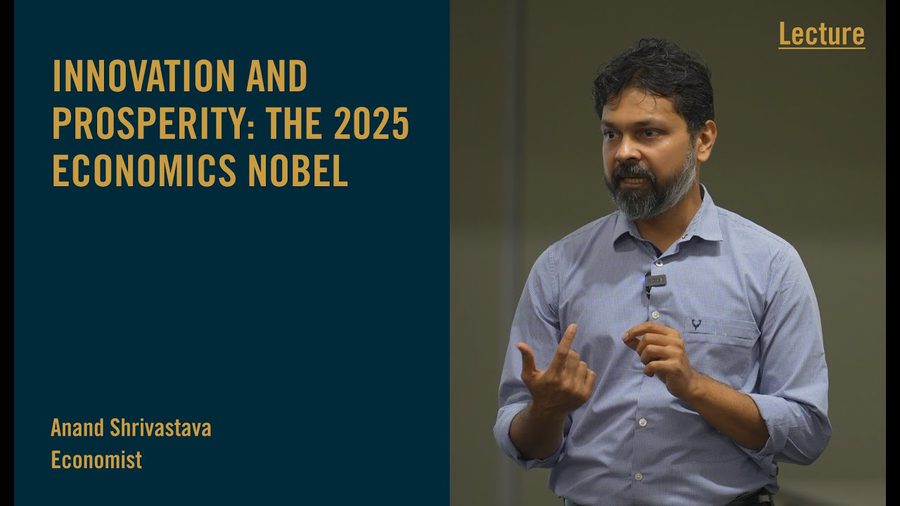
Over the last ten years of teaching, I have come to see it as a craft. Anyone who knows their subject and genuinely cares about students can get good at it, but that takes continuous practice and honest reflection. Part of that reflection, for me, has been recognising that different students acquire different kinds of knowledge (factual, procedural, conceptual) differently, and that any given topic may call for a variety of modes and approaches. Classroom delivery, I have come to think, is a performance, not in a theatrical sense, but one that needs preparation, rehearsal, and the ability to respond to the audience. Yet what distinguishes a university course from an online one is not content but the relationships it builds: between instructor and student, among students, and between students and the world through the subject. Every cohort is different, which means those relationships, and the course itself, have to be rebuilt each time.
I have mostly taught microeconomics, econometrics and quantitative methods across different levels of the undergraduate and postgraduate programmes. I have also, on one happy occasion, strayed into economic history.
2025–26
The first microeconomics course in the MA Economics programme at Azim Premji University. The course begins with a review of game theory before developing a theory of incomplete contracts. The second half applies these frameworks to labour and credit markets, with students reading applied theory papers drawn from frontier research in these areas.
A third-year undergraduate elective that develops game-theoretic tools and applies them to a wide range of social and economic phenomena. A distinctive feature of the course is that each student reads one book from a curated list of popular accounts of game theory, connecting the formal material to real-world applications and broader ideas.
Previously Taught
An introductory undergraduate course covering the quantitative tools used in economic analysis, with an emphasis on building intuition alongside technique.
An introductory undergraduate course on statistical reasoning and methods as applied in economics, covering descriptive statistics, probability, and the foundations of inference.